Emergency Medical Insurance: What You Must Know Today
The short version
Insurance can feel like a wall of jargon. It doesn't have to be.
If you're reading this, chances are you're trying to make a careful decision — not chase the lowest sticker price. Good. Coverage that fits your life is worth taking your time on.
Here's the short version, in plain Canadian English. We'll walk through the parts that actually matter and skip the fine print that doesn't.
This guide walks through emergency medical insurance: what you must know today the way a careful Canadian advisor would — one decision at a time, no scare tactics, no jargon you'd need to look up.
What it actually is
Health insurance sounds technical, but the idea is simple: you pay a regular premium and, in return, an insurer takes on a financial risk you couldn't carry alone.
That's the whole bargain. Everything else — riders, exclusions, conversion options, dividend scales — is a variation on that single trade. The trick is matching the variation to the life you actually live, not the life a brochure imagines.
Once you see it that way, comparing policies becomes a lot less intimidating. You're not picking a financial product so much as deciding which risks you'd rather not carry yourself.
Most Canadians end up with a small handful of plans across their lifetime — one to cover the years their income is replacing things, one to cover the years their estate is. Each does one thing well.
Free, private, no credit check. Average savings: $480/year.
Why it matters in Canada
Canadian families don't usually go bankrupt from one big bill. They get there from the small, ongoing pressure of a missing income — a mortgage that still shows up every month, groceries, child care, the unglamorous middle of life.
Health insurance is designed to absorb that pressure so the people you love don't have to make sudden, hard choices on the worst week of their year. It buys time, and time is what most grieving families say they wished they had more of.
Public coverage helps with some of this. Provincial healthcare, CPP survivor benefits, and group benefits at work all play a role — but the gaps are often bigger than people expect, especially for self-employed Canadians and newcomers without a long Canadian work history.
Private coverage fills those gaps. It's not glamorous. It's a quiet line item that keeps a household stable when something loud happens.
“Coverage you understand beats coverage that looks impressive on paper.”
What actually moves the price
Your age and health are the two biggest dials. Smoking status is a third — and Canadian insurers define “smoker” more broadly than most people realise (cannabis, vapes, and even the occasional cigar can count).
Everything else — gender, occupation, hobbies, family medical history, BMI — adjusts the rate at the margins. Skydivers and pilots pay more. So do people with a recent diagnosis or a parent who developed heart disease young. None of this is a deal-breaker; it's just information the insurer prices in.
The single most reliable way to lower your premium for life is to apply while you're young and healthy and lock the rate in. Premiums you secure at 32 don't quietly creep up at 45 — that's the appeal of a level term policy.
A licensed advisor can also place your application with the insurer most likely to give you a favourable rate class. That alone can change the price by 15–30%, and it costs you nothing extra to use one.
How the process works
It's faster than most people expect. A short questionnaire, sometimes a quick medical (a paramedical visit at home or at work), then a policy issued within a few weeks. You're free to cancel during the review period if anything looks off — every Canadian policy comes with a 10-day free-look window.
If you don't qualify for fully underwritten coverage, simplified-issue and guaranteed-issue policies exist. The premium is higher and the coverage cap is lower, but the door is rarely fully closed. For most Canadians with a chronic condition, simplified issue is the right next step.
Once a policy is in force, the only ongoing work is paying the premium and reviewing the beneficiary every few years. That's it. Insurance shouldn't take up real estate in your head.
How to compare quotes properly
Two quotes for the same person can differ by 30% or more. The cause is almost never fraud — it's how each insurer prices the same risk based on their own underwriting models, reinsurance arrangements, and book of business.
When you compare, line up identical coverage amounts, identical term lengths, identical riders, and identical health classes. Premium alone is meaningless without that. A $32/month quote with a $25,000 coverage cap is not better than a $34/month quote with $500,000.
It also pays to look past the headline number. Conversion privileges, renewal terms, the financial strength of the insurer, and the speed of claim payment all matter — and none of them show up in the monthly premium.
Where to go from here
There's no perfect policy. There's only the one that fits the people you love. Start with three quotes, side by side, and go from there.
Why your provincial health card barely helps abroad
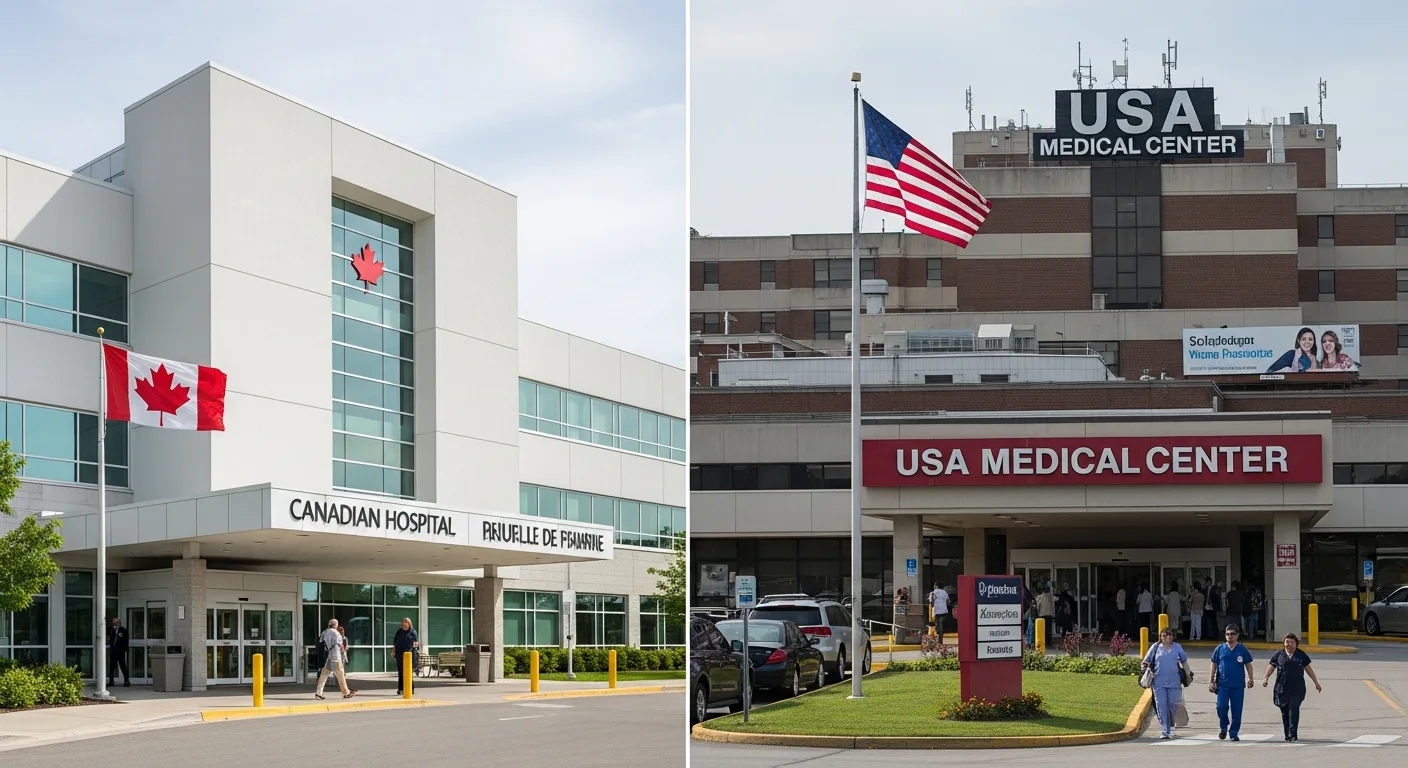
It's a common and expensive assumption: my OHIP (or RAMQ, MSP, AHCIP) card covers me everywhere. Outside Canada, it barely does. Provincial plans reimburse only a tiny fraction of foreign hospital rates, and several provinces have wound that down further — Ontario ended its out-of-country emergency reimbursement program entirely, so OHIP now pays essentially nothing toward care received abroad.
Even where a small reimbursement still exists, it works nothing like coverage. Your provincial plan will never pay a foreign hospital up front, and hospitals abroad often refuse non-emergency treatment until they see proof of insurance or a deposit. You'd pay the bill yourself, then chase a partial refund months later.
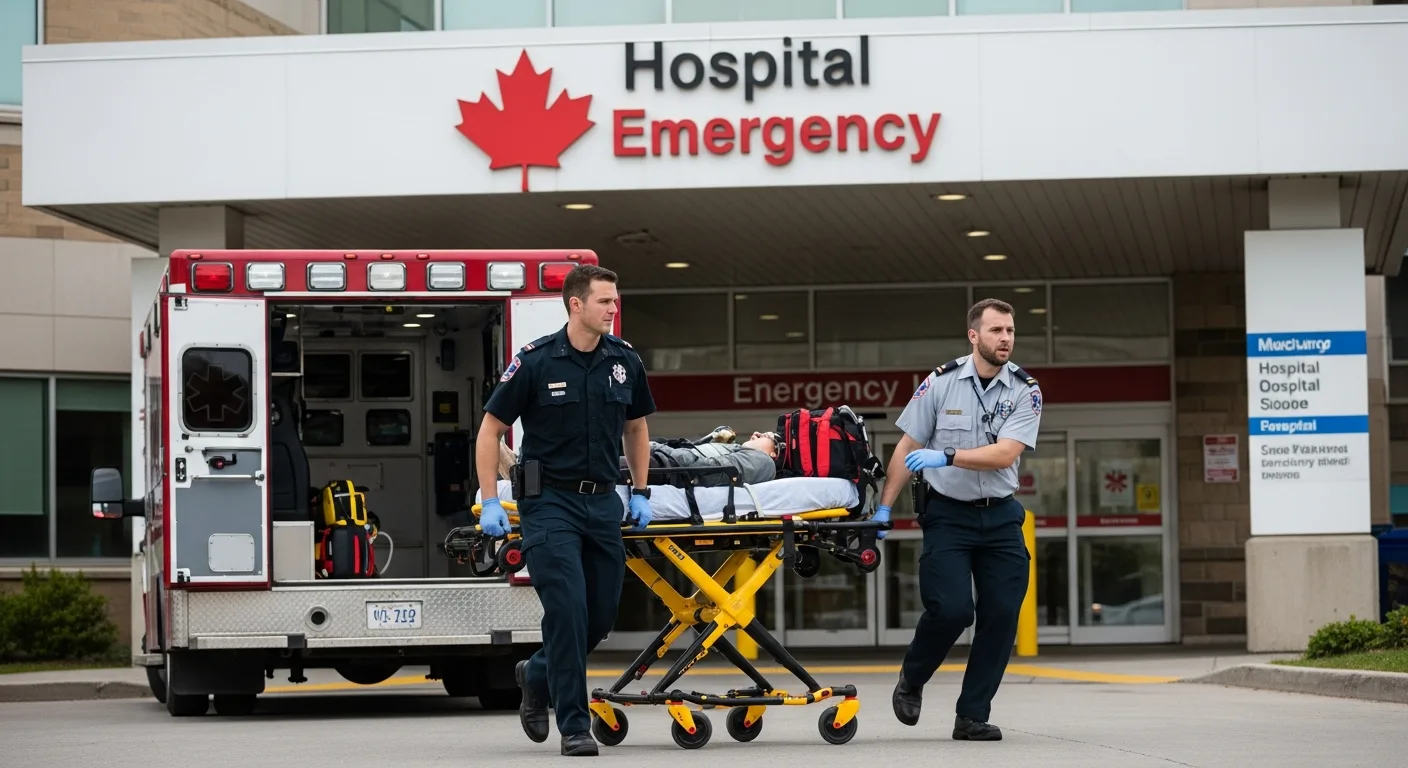
The gap that ruins budgets is medical evacuation. If you need to be flown home on an air ambulance or moved to a better-equipped hospital, that flight alone can run tens of thousands of dollars — and no provincial plan covers it. Emergency medical travel insurance is what pays that bill.
The same logic applies within Canada. Your card travels between provinces for doctor and hospital visits, but ambulance rides, prescription drugs, and services your home province doesn't insure can still leave you out of pocket in another province.
- OHIP and most provincial plans reimburse little to nothing for care received outside Canada.
- Provincial plans never pay foreign hospitals directly — you pay first, claim later.
- Air ambulance and medical repatriation are not covered by any provincial plan.
- Even between provinces, ambulance fees and out-of-province prescriptions can be uninsured.
What emergency medical does and doesn't cover
Emergency medical insurance is built for one job: paying for sudden, unexpected illness or injury while you're away from your home province. That's the whole point of the word emergency — it responds to the unforeseen, not the planned.
On the covered side, a solid plan pays for hospital stays, emergency room and physician fees, diagnostic tests, emergency surgery, prescriptions written during the emergency, ambulance transport, and — critically — medical evacuation back to Canada. Most plans also include limited emergency dental for accidental injury and 24/7 assistance to coordinate care in a language you understand.
On the excluded side, this is not a substitute for a health plan. Routine check-ups, ongoing care for a condition you already knew about, elective procedures, cosmetic surgery, and childbirth are generally not covered. Injuries from high-risk activities — mountaineering, some extreme sports, or incidents involving alcohol or drugs — are commonly excluded unless you buy a specific add-on.
Read the definition of emergency in your policy before you travel. Once a condition is diagnosed and stabilised, continuing treatment for it often stops being an emergency in the insurer's eyes — which is exactly why coverage limits and pre-existing rules matter so much.
- Typically covered: hospital, ER, surgery, diagnostics, ambulance, and medical evacuation to Canada.
- Often included: emergency dental for accidental injury and 24/7 multilingual assistance.
- Usually excluded: routine care, elective and cosmetic procedures, and childbirth.
- Watch for: high-risk activities and alcohol- or drug-related claims, which need add-ons or are barred outright.
Coverage limits, exclusions, and who needs a policy
Coverage limits are the headline number — the maximum the insurer will pay per person, per trip. In Canada these commonly range from $1 million to $5 million. That may sound wildly high until you see a real foreign hospital bill: an intensive-care stay plus an air ambulance home can climb past $250,000 quickly, and a serious event in the United States can run higher still. A higher limit costs only a little more and removes the worst-case worry, which is the entire reason to buy the policy.
The exclusion that catches the most people is the pre-existing condition rule. Most plans require any chronic condition — heart disease, diabetes, a recent change in medication — to be stable for a defined window before departure, often 90 to 180 days. If it isn't stable, a claim tied to that condition can be denied. When in doubt, ask for the stability period in writing before you leave.
It also helps to know how emergency medical differs from trip cancellation or interruption coverage. Emergency medical pays your health bills while you're away; trip cancellation refunds prepaid costs if you can't travel or have to cut a trip short. They solve different problems, and many travellers want both — but never assume one includes the other.
Who actually needs emergency medical coverage? Canadians travelling or working abroad, snowbirds wintering in warmer climates, students studying overseas, and — just as importantly — visitors to Canada and newcomers who aren't yet covered by a provincial plan. Parents and grandparents applying under the super visa must carry at least $100,000 in medical coverage, and new permanent residents often face a waiting period before provincial health kicks in, leaving a gap that only private coverage fills.
- Typical limits run $1M–$5M per person, per trip; higher limits cost only slightly more.
- Pre-existing conditions usually must be stable for 90–180 days before departure.
- Emergency medical ≠ trip cancellation — one covers your health bills, the other refunds prepaid costs.
- Needed by: travellers, snowbirds, students, visitors to Canada, super visa applicants, and newcomers in the provincial waiting period.
Frequently asked questions
Sources
- Travel insurance: what to know before you go — Government of Canada (travel.gc.ca)
- OHIP coverage while outside Canada — Government of Ontario
- A guide to travel health insurance — Canadian Life and Health Insurance Association (CLHIA)
- Super visa: medical insurance requirement — Immigration, Refugees and Citizenship Canada
Licensed Canadian advisors and editors. We help Canadians compare quotes from 25+ vetted insurers — and we write the way we'd talk to a friend.